
Camera Nitty Gritty: Supplemental - EDoF

Published by Steve Litchfield at 17:19 UTC, April 15th 2010

In a late-breaking(!) addition to his extended Camera Nitty Gritty series, Steve Litchfield looks at the EDoF cameras in some of Nokia's S60 smartphones, explains how the Extended Depth of Field technology works and compares performance to traditional focussing units. With photographic examples, he shows how choosing EDoF for the upcoming E5 was a very smart move indeed for the (skill level of) target users.

"When an image is captured (effectively three 'photos', in this case, one for each of the RGB components), every part of the photo's viewing area is analysed, in turn, with the sharpest of the RGB images for each individual part determining the detail used (for that part), with the other images supplying appropriate coloration. Then it's onto the next part, in turn. The exact size of each 'part' is also a commercial secret but is likely to be in the order of 10 by 10 pixel squares. Here's an example of the output (taken on the Nokia E55):"
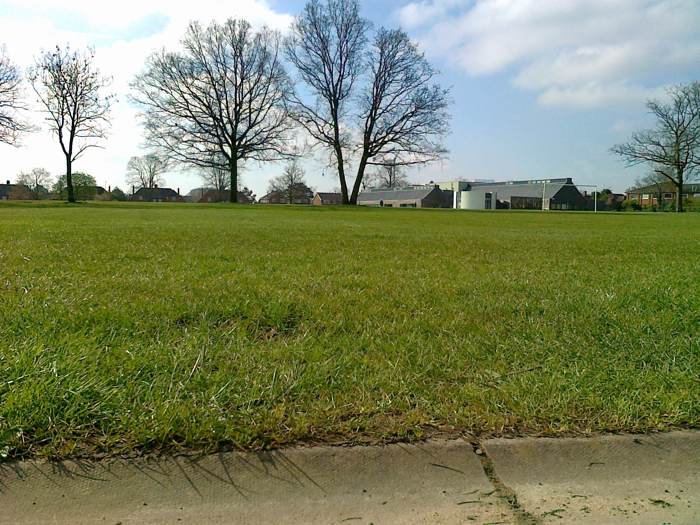
EDoF at work

Read on


Filed: Home > News > Camera Nitty Gritty: Supplemental - EDoF

Platforms: General, S60 3rd Edition

Categories: Hardware, Miscellaneous, Editorial Thoughts

News Discussion

Abushaheed
All that just went WAAAY over my head, but it was an interesting read anyway. I do have one question as a result of my read however and that is: How does an EDoF Camera affect things like the business card macro shots to convert to contacts?
JCB_Digger
@Abushaheed

The way I'm reading it is that an EDoF camera cannot take macro business cards - you need to hold them at around a metre away (which should be in focus), and then zoom/crop them down.. Not ideal..

Another area where EDoF doesn't work is for barcode scanning/shopping applications which work by recognising the barcode and then hunting the product code down on the internet for the cheapest price.
slitchfield
@JCB: Correct, such apps wouldn't work on EDoF cameras. Or at least would be severely limited!
seki
to use the front facing camera .. not ideal .. but if you hold the card with one hand and press the take photo with the other .. uh wait .. well yeah .. its a pain!
PekkaR
The trick looks pretty nice to me. If I was to take shots with an EDoF camera and show them to a serious hobbyist or professional who's a stickler for things like how the colors turn out, would they fall into despair and prepare a hanging noose for both me and themselves?

I'll probably have to look back at the Camera Nitty Gritty articles and see what the little bit of skill needed with auto-focus cameras is, now that I've got one...
mkr10001
Steve, i didn't say you could take a picture of my car :D:D:D
Unregistered
and you also took a picture of my cat.....or was that its twin?
Hurlley
Good read, always wondered why suddenly auto focus became a feature and wondering what the heck all non autofucus cameras did if they werent auto focusing.

although I feel Nokia just cheaped out and this is just the somewhat happy result.
ratza
Large depth field isn't that good. With a narrow depth of field you can bring the subject to attention easier, the background being blured. The attachment tells better than me what I'm refering to. The flowers were at only 10cm (around 4 inches) apart.

Also, the close-up pictures taken with large field depth lenses tend to be fatiguing. For landscapes it's a clear advantage, mostly for the point-and-shoot mode where you need to capture a moment. At least this is my opinion.
bp101
I agree with ratza, I'm not sure that wider depth of field is necessarily the way to go. Surely a large proportion of cameraphone pictures are of people, and having a sharp background can be distracting.

Interesting concept, though.
Unregistered
Can you take a picture of A4 paper full of text? I wonder whether EDOF can serve my needs. Thanks
Moran
Steve Lichfield looks at the EDoF cameras in some of Nokia's S60 smart phones...
illusionado
DOF and Aperture are just proportional in terms of giving focus on the image. Extended DOF means that more of the image will be focus or deeper part of the image will be focus and in terms of Aperture Extended DOF means lower Aperture compare to fixed focus.

Advantage is that you will have a great chance to focus deeper part of the image whilst your fixed focus camera will only focus the farthest object it can reach on its lens. But I think both fixed and edof have still the same largest aperture size also on its shallowest dof.
viipottaja
Is it possible to turn of this approach/effect? Or would the camera not focus anywhere if one did? :)
slitchfield
Well, there's a 'Landscape' option in the scene menu - but no, I think the EDoF optics/electronics are always active, by definition.
Dr Tran
Losing out on the ability to take pictures of documents or business cards or QR codes is a massive failure on Nokia's part, especially considering Nokia brought attention to the world that phones could do these tasks.

Full thread: 16 Comments / Post New Comment

Search

Navigation

Social

Advert

Translate

Also All About