
Sunlight - the flaw in many a manufacturer's display specs (Nokia N8/iPhone 4)

Published by Steve Litchfield at 6:29 UTC, June 9th 2010

Around 36 hours ago, Apple unveiled its latest iPhone 4 to the world - excellent build materials on it, but I believe that they - and Nokia - and others - are missing an important trick: what happens when you take your oh-so-portable smartphone out into the world. A world where the birds are singing, the people are smiling and the sun is shining. And you can't see a blessed thing on your smartphone's display. Returning to a theme from exactly a year ago, I compare some recent device displays to prove a very, very important point.

Sun, sun, sun!

NB. Here's my original feature, from mid 2009 - allow me to quote a small section from it:

"Now, you're unlikely to be checking your email or editing a document in the full sun (unless you're a real workaholic!), but you are likely to want to see the screen to:

  • see who's calling you
  • see the image of the thing you're trying to photograph
  • see a map of where you are and where to go next

And so on. Over and over again, I believe that some manufacturers neglect to think about screen contrast in all conditions, with resulting poor choices in terms of technology and materials. "

As we try to do more and more on our smartphone, and especially as screen sizes increase, we need to actually read their displays. Some of the latest app trends include augmented reality, 720p 'HD' video capture and walking navigation, for example, all of which need you to see your phone's display very clearly while out and about.

But add in the full sun, not unknown even in the usually rain-soaked UK, and you've got a huge headache. And I just do not see why manufacturers continue to ignore this problem.

To prove the scale of the issue, I took a number of current 2010 (equivalent) devices, cranked up their screen brightness and brought them out into some direct June sunshine. I tried to photograph what my eyes were seeing as accurately as possible. In each case, I've cropped the photo to show a few icons from the device's main applications menu from the centre of the display. 

In a very rough order of worst to best (the exact order being, arguably, subjective!):
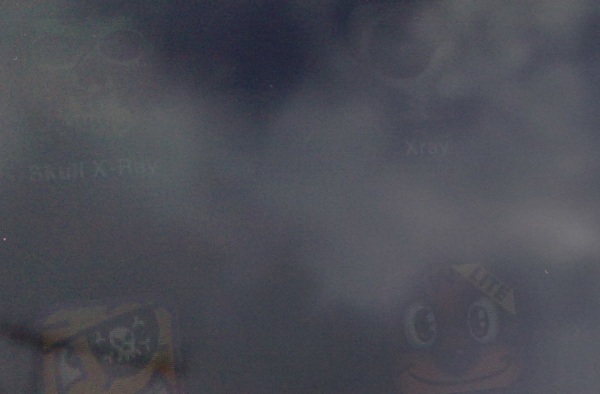
IPS TFT screen sample in sunlight

IPS TFT (this is the screen technology used in the Apple iPad and upcoming iPhone 4. The IPS bit stands for 'In-Plane-Switching' and refers to the way the liquid crystals are aligned parallel to the screen rather than perpendicular. The claimed advantages are wider angle of viewing and better colour accuracy, but, as we can see here, an IPS display is extremely hard to read in the sun)
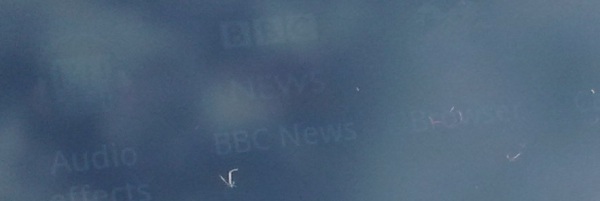
TFT screen sample in sunlight

TFT (the lowest common denominator in LCD displays, the TFT bit stands for "Thin Film Transistor". Advantages are low price and good brightness - indoors. Outdoors, it's a different story, as you can see above, modelled on the Motorola Milestone/Droid. A huge number of touchscreen phones and a smaller number of non-touch ones use TFT, including the Nokia N97 mini, Nokia X6, Nokia 5800, Samsung i8510, Motorola Milestone and almost all Windows Mobile handsets) 
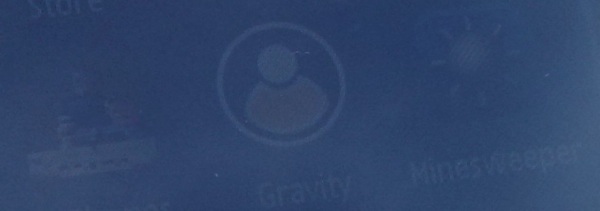
OLED screen sample in sunlight

OLED (or, more usually, AMOLED, standing for (Active Matrix) Organic Light Emitting Diode, this technology is particularly interesting because it doesn't need a backlight, giving theoretical power savings - though see here - and because the colours emitted are particularly strong and vibrant - again, indoors. Take an OLED display out into the full sun and results are unfortunately similar to TFT and IPS displays. OLED screens are used in the Nokia N86, Nokia N85, Samsung i8910 HD, HTC Desire, Google Nexus One, among others, and - notably - the upcoming Nokia N8. Interestingly, there's a variant, 'Super AMOLED',  which achieves better sunlight contrast by combining the capacitive touch and OLED layers - I've yet to see a Super AMOLED screen in person though)
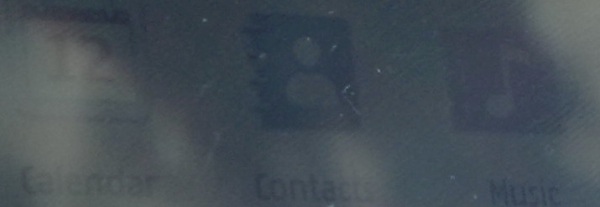
Transflective with resistive touch screen sample in sunlight

Transflective with resistive touch layer (in this case on the Nokia N97, though the Sony Ericsson Satio also uses this screen. The 'transflective' term refers to a special polymer layer, the transflector, that both allows light through from behind (e.g. a backlight) and also reflects light coming from in front (e.g. the sun/natural light). Thus indoors you get good brightness from artificial power. Outdoors, the sun easily overpowers the backlight but it's not a problem since the sun's light is reflected back through the LCD, giving, if anything, better contrast. Great theory, but then if you want a resistive touchscreen as well, then the gel layers for this have to go on top and they'll significantly dull the transreflective properties. As here on the N97 screen. Contrast is better in sunlight than TFT, but only marginally.)
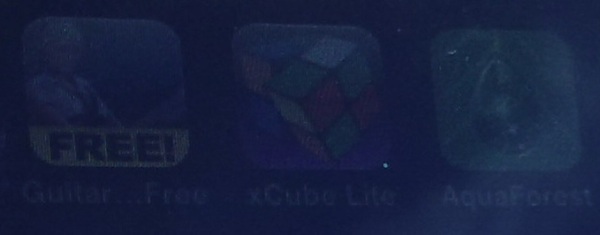
Transflective screen sample in sunlight

Transflective with black background (see above for the tech explanation. Modelled here on the Apple iPhone 3G, but also used in the 3GS and related products, like the iPod Touch. The iPhone is almost always used with a black theme, making the icons here harder to read than they should be, but trust me, the iPhone screen, with its capacitive touch layer, is about the best there is in sunlight)
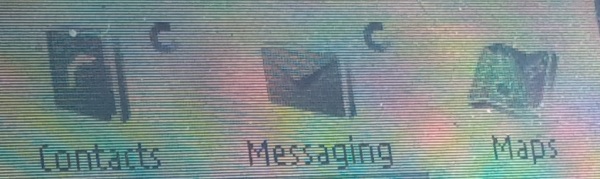
Transflective screen sample in sunlight

Transflective with light background (modelled here on the Nokia N96, but transflective displays are also in just about every Nokia non-touch smartphone from the last 8 years [N76 and N93i excepted]. Having the light/white background gives maximum effect for the natural light to reflect back through the LCD and give great contrast.)

__________

Given the superiority of transflective displays, seemingly without any real disadvantages, it beggars belief that manufacturers continue to pump out devices which turn into mirrors when you leave your house in nice weather. The upcoming Nokia N8 uses OLED technology (not Super AMOLED) and the upcoming iPhone 4 uses IPS technology, so I fully expect to wander round with each, this summer, trying to shade the screen in order to be able to read their displays properly.

Or I could just pull out one of my many older non-touch Nokias (or a previous iPhone, to be fair) and see exactly where manufacturers keep going wrong my maps, my messages, my social networks. And enjoy some sunshine at the same time.

Steve Litchfield, All About Symbian, 9 June 2010


Filed: Home > News > Sunlight - the flaw in many a manufacturer's display specs (Nokia N8/iPhone 4)

Platforms: General, S60 3rd Edition, S60 5th Edition, Symbian^3

Categories: Hardware, Miscellaneous, Industry, Editorial Thoughts, Events

News Discussion

Sockatume
Is there any reason why an IPS display should be incompatible with a transflective layer? I know Apple omitted it from the iPad but I see no reason for them to skip it on the iPhone, a device which is much more likely to be used outdoors.
PaulVise
Steve and his sunlight tests with sun, 1000W halogen behind him and awkward positions.
Unregistered
How can you possibly know the iPhone 4 will not perform as well on sunlight? Have you or anyone else tested it? No.
Knowing Apple do you really believe that they will go backwards?
I'm not an Apple fan but I seriously doubt it. This not Nokia we're dealing here.
There is no way they will go from the 3GS which is excellent outdoors to the new device with inferior performance.
This is wishful thinking on your part. Desperately trying to find faults with the new iPhone.

I am afraid you'll eat a lot crow when the iPhone is released.
Unregistered
Quote:
Originally Posted by Unregistered View Post
How can you possibly know the iPhone 4 will not perform as well on sunlight? Have you or anyone else tested it? No.
Knowing Apple do you really believe that they will go backwards?
I'm not an Apple fan but I seriously doubt it. This not Nokia we're dealing here.
There is no way they will go from the 3GS which is excellent outdoors to the new device with inferior performance.
This is wishful thinking on your part. Desperately trying to find faults with the new iPhone.

I am afraid you'll eat a lot crow when the iPhone is released.
Another example of extreme negativity towards AAS there. At no point in his text did Steve directly write that the iPhone 4 will have poor screen visibility in sunlight. He stated that an IPS screen is hard to see, and that the iPhone 4 has IPS, but made no direct comment about how the iPhone 4 performs. You are desperately trying to find faults in Steve's work, so get your own crow and season it, your lunch is ready.

The thing that puzzles me is my cheap compact digital camera. It has an LCD screen that is perfectly visible in all lighting conditions including direct sunlight, how does it do it?
morpheus2702
Quote:
Originally Posted by slitchfield View Post
And I just do not see why manufacturers continue to ignore this problem.
Maybe because it isn't that big a problem? Or the number of complaints/potential sales they would gain doesn't warrant their investment?

It'd be interesting to know how high up 'sunlight performance' is on people's priority list when choosing a phone?
Bulakbuk
Fantastic piece of article!

As far as touchscreen oriented phones are concerned, outdoor readability is an absolute nightmare.

I have yet to use a touch based device that I can easily type and read a text message, I sure hope that the next best technology would be enough to address this issue.

The old Palm PDAs of the olden days have fairly good screens on direct sunlight, I can still use the whole functionality of the device without ever having to squint a bit.

The worst touchscreen on direct sunlight I must say is the SE P990i, you can hardly see a character.

Tacsiyapo!
Unregistered
HI with the new Super Amoled you have no problems with sunlight!

Check out:
http://www.oled-display.net/super-amoled
Andrew Weekes
How about power consumption and battery life, the bane of the modern smart phone user? Or dramatically worse contrast ratios?

AMOLED displays have significantly reduced power consumption, especially when combined with smart UI design (e.g. dimming of non-focus areas of the screen, for example around a dialogue box).

As with all these things what's important to one person is less important to another. Steve places high importance to sunlight readability, others are happy to forgo it for improved battery life and dramatically improved contrast ratios.
slitchfield
"Steve places high importance to sunlight readability" Every pundit I listen to on podcasts and the like, they ALL complain that their otherwise wonderful touchscreen phones can't really be used outdoors. It's not just me. 8-)

Surely the whole POINT of a smartphone is that it lets us take our computing power out into the world, not just cowering in an office or living room?
morpheus2702
Sure they may complain but again, how important is having a sunlight-legible screen in the scheme of things?

I'd like to have a better screen, be twenty years younger and hung like a baboon but you learn to cope...
Dazzy
How important is it? are you for real?

Even if you're out and about and want to order dinner it's next to impossible because we cant read the screen. I know as I do this every day.
Unregistered
Quote:
Originally Posted by slitchfield View Post
"

Surely the whole POINT of a smartphone is that it lets us take our computing power out into the world, not just cowering in an office or living room?
It certainly is the point of being able to use the phone as a camera, which is one of the core strengths of the N8. How good is a camera if it has no viewfinder and you can't see what you are framing on the screen in good weather when you are more likely to be out using a camera.

And when you are likely to be out in the sun using the maps to navigate, trying to read the screen.
morpheus2702
Quote:
Originally Posted by Dazzy View Post
How important is it? are you for real?

Even if you're out and about and want to order dinner it's next to impossible because we cant read the screen. I know as I do this every day.
Ummm... yeah, I'm for real.

If you need your phone to order dinner and it's next to impossible because you can't read the screen, could I suggest a different restaurant/takeaway or a different phone?
Unregistered
Quote:
Originally Posted by morpheus2702 View Post
Ummm... yeah, I'm for real.

If you need your phone to order dinner and it's next to impossible because you can't read the screen, could I suggest a different restaurant/takeaway or a different phone?
There are better real world examples, as personally I find that booking a restaurant table depends mostly on the speech capabilities of the phone, rather than the screen.

The aforementioned maps and cameras illustrate the problem better.
clonmult
Quote:
Originally Posted by morpheus2702 View Post
Ummm... yeah, I'm for real.

If you need your phone to order dinner and it's next to impossible because you can't read the screen, could I suggest a different restaurant/takeaway or a different phone?
You can't be for real.

I've yet to find a current phone that has a screen thats readily visible in strong sunlight. Its mildly irritating to have to walk into the shade in order to see who's calling, read/send a text.

My Panasonic camera is absolutely fine for daylight viewing - no problems whatsoever. So why is it so apparently difficult for such an effect on a mobile?
Unregistered
Quote:
Originally Posted by morpheus2702 View Post

I'd like to have a better screen, be twenty years younger and hung like a baboon but you learn to cope...
Finally we get to the root cause of your apparent issues.
Unregistered
Quote:
Originally Posted by clonmult View Post

My Panasonic camera is absolutely fine for daylight viewing - no problems whatsoever. So why is it so apparently difficult for such an effect on a mobile?
Touch screen is the problem I think. I still have some aincient Nokia dumb phones that are prefectly readable in direct sun, indeed my old N70 is.
morpheus2702
Quote:
Originally Posted by clonmult View Post
You can't be for real.

I've yet to find a current phone that has a screen thats readily visible in strong sunlight. Its mildly irritating to have to walk into the shade in order to see who's calling, read/send a text.

My Panasonic camera is absolutely fine for daylight viewing - no problems whatsoever. So why is it so apparently difficult for such an effect on a mobile?

Umm seriously, yes, I am for 'real'. I 'Shizzle ma nizzle' and all that funky stuff.

I'm not arguing the fact that walking in the shade is 'mildly irritating'. I'm just asking is it, for instance, in the top three considerations you take into account when buying a phone?
morpheus2702
You have me down to a tee but I'm coping. :)
Unregistered
Quote:
Originally Posted by morpheus2702 View Post
You have me down to a tee but I'm coping. :)
You'll be pleased to know that there is nothing particularly impressive about baboon phallus. I've no idea why that expression is used.
morpheus2702
Quote:
Originally Posted by Unregistered View Post
You'll be pleased to know that there is nothing particularly impressive about baboon phallus. I've no idea why that expression is used.
Best post... ever! :):):):):)

I need to update my CV. How does a carthorse rate?
Shivoa
The N93i's display was transflective, giving the good outdoor visibility (even in direct Sunlight) and telltale rainbowing typical of that display tech. I used the N93 as my primary phone for a good few years until my need for a headphone socket and microSDHC slot combined with a desire for a larger screen for web browsing and pushed me towards at 5800 (which is one of the worst touchscreen TFTs for outside usage in my experience, no visibility in direct sunlight and limited visibility even in shaded outside conditions).

With that said, the 5800 display also beats every OLED touchscreen I've seen for outdoor visibility so I'd probably rank it lowest on your scale (certainly below typical TFTs). Then again I haven't seen an IPS TFT in direct sunlight that wasn't a mains powered monitor (with anti-glare coating) so maybe that will rank lowest (assuming Apple aren't going to use a transflective version of the tech for their new phone).

The high res screen on the iPhone and decent specs have made me seriously consider giving up on my long-term insistence on open devices, with the Samsung Galaxy S being the dark horse which could offer an alternative with its Super OLED display (although I have yet to see how that tech works outside and it seems to be an advance to just pump out more light itself to slightly mitigate the problem rather than the smarter solution that transflection offers).
slitchfield
No, the N93i had a TFT screen - the N93 had the transflective one etc. Great shame.
Wildsau
A non transflective display is a no go for me.

My wife owns the 5800 (non transflective), I have a N97 (transflective), and the different readability in (bright) sunlight is incredible.
On the 5800 you really can't read a thing, it get's washed out completely, the N97 remains read- and usable which is important to me since I spend a lot of time outdoors.

I thought that SE is the only company that's so far behind that they almost never use transflective screens in their phones, sad to see that others are closing up (or stepping back).

Non transflective? Never ever.
Dazzy
Quote:
Originally Posted by morpheus2702 View Post
Ummm... yeah, I'm for real.

If you need your phone to order dinner and it's next to impossible because you can't read the screen, could I suggest a different restaurant/takeaway or a different phone?
LOL and what good would choosing a different restaurant do, you still have to find the number. A transflective layer adds about £5 to the cost of a handset so like Steve argues it's stupid not to add it to ALL phones.

Full thread: 50 Comments / Post New Comment

Search

Navigation

Social

Advert

Translate

Also All About